Monday, 7 October 2013

FREE Opportunity for Young Entrepreneur to Learn and be Honored.

BusinessDay Media Ltd, in partnership with the Federal Ministry of Industry, Trade & Investment (FMITI) and Small and Medium Enterprises Development Agency (SMEDAN), will be hosting an awards ceremony for our “40 under 40” Honourees. The awards ceremony is coming up at 
Time- 12noon 
Day-Friday, 18th October 2013  
Venue-Landmark Village Events Centre, Victoria Island, Lagos. 

Students from Universities across the country are expected to register and come for the event. click the link below to get registered for the event

https://docs.google.com/forms/d/16e_os1Wsiitsv3sINhcm7onKJ63fpVhkBOcPN5DvnjY/viewform

 The “40 under 40” initiative is designed to celebrate the depth of business talents in Nigeria. It is targeted at young men and women under 40 years of age who have created a distinct place for themselves in varied industries and expertise. The initiative recognizes not only the determination and commercial drive of these innovators, disruptors and job creators; but also the philanthropic pursuit that balance their corporate achievements and as such acknowledge their individual contributions to the welfare of the nation.

Thursday, 3 October 2013

INTERVIEW: Why We Killed Ironsi And Installed Gowon — Jeremiah Useni


Lt. General Jeremiah Useni needs no introduction. The prominent role he played during the reign of late Head of State, Sani Abacha, as Minister of the Federal Capital Territory, Abuja, is well known. However, there are two things about Jeremiah Useni, who was referred to as ‘Jerry Boy’ at the time. He was indeed a Boy, because he joined the Army at the age of 14. Firstly, he was one of the soldiers who fired shots during the coup against General Ironsi in which the General was killed in Ibadan. Mr. Useni was also the closest person to General Abacha up to his last moments.
This interview, conducted in Hausa by the Hausa language newspaper, Rariya, and translated to English by PREMIUM TIMES’ Sani Tukur, reveals a lot of things many of us didn’t know, including the conspiracies that denied him the opportunity of succeeding Mr. Abacha after he died. Enjoy…
You joined the Army as a fourteen year old, and you were posted to England for a Course at sixteen, how did you feel at the time?
Honestly, it was like a dream to me because I broke my left leg during a game of football, just one year after I joined the Army. As a young footballer, I had very strong shooting ability with my left leg. Anyone who was unfortunate to be hit with my shots really suffered no matter their size. I spent about four months at the hospital In Kaduna. Most of the hospital staffs at the time were Europeans, and they were very efficient. They joked a lot with their patients and they related with you as if you had known them for ages. One day, they decided to come and test all of us and see those who had made progress, so that they would be discharged. When they came to me, they asked; ‘can you stand up?’ And I said, ‘yes’. Then I was asked to stand up and walk. The whiteman said, ‘this one is ok now, he can be discharged’.
Later, they said there would be exams to select those who would go to England, and I had spent four years without studies or anything. However, there was a senior officer who was teaching me, and I went to write the exams, and I passed. I was not even sure we were really going to Europe until one day when they came to the dining room and called out our names, five of us; they asked us to go to a particular building, that our attention was needed there. On getting there, we saw that they had prepared omelet and other kinds of delicacies of the Europeans. At the time, we were used to eating Garri only, we either soak or prepare Eba with one green soup like that. We realised that we might really be going to Europe.  That was how I went as a very young boy, and I thank God for that because before we left Nigeria, they were paying us one naira, in fact, we were first paid seventy kobo, until after one year, when they increased it to one naira.
When I went to England, under the Boys Company battalion, they started paying us four pounds after only two months. I wrote to my father to tell him that we were now receiving four pounds as pay, and I asked him to pay any tax he was asked to pay because I was also enjoying. I told him that just to show him how happy I was.
Many people were afraid of joining the Army at the time you joined. Were your parents alive at the time?
They were alive. It was my father’s friends that did not want me to join. My father was a Royal Guard, and you know a royal guard does not fear anything. He was the most influential official next to the emir, who knows any judge at time? We didn’t even see a policeman until we went to Jos. My father’s friends were advising him not to risk his only son, because I was an only child, but he said since that was what I wanted, I should go ahead, he told them that only God would decide if I live or die.
You had some time with the Sardauna and his Ministers, such as Michael Audu Buba?
We just hear them speak on the radio, or read about them in Newspapers, but I saw Sardauna a lot when I was in Boys Company. He used to visit us, because there was a sugar cane farm, where we used to train, and after such trainings, most of us do get some sugar cane in the farm. Sardauna used to come there and we saw him a lot. I first saw him in 1957.
After your return from England, Sardauna , Tafawa Balewa and others were killed in 1966. Where were you at the time?
I was with 4th Battalion Ibadan. The coup came to us as a surprise, like a thief in the night. We just heard in the morning that Sardauna and the rest were killed. In fact, we did not get the news on time. Where was our C.O Lt. Col. Largema? And Brig. Maimalari and Col Kur Mohammed? We learnt they were all killed. And we asked, what type of coup was that? At the time, we were not concerned with where you came from or what your religion was. As long as you were from the north, we cherish each other so much.
So we organised ourselves and agreed that what happened was very dangerous. We also learnt later that a broad government was being formed. A northerner will be transferred to the South, while a Southerner will be transferred to the north. General Hassan katsina was the governor of the north at the time. People like Kashim Ibrahim were also gone. So those of us, Army officers from the north were very angry really.
What was your rank at the time?
I was a Second Lieutenant then, my mates were Ibrahim Babangida, Garba Duba, Mamman Magoro, and the rest. I was together with Yelwa in 4th Battalion, while Duba was in Kaduna. There was another officer from Niger state, I have forgotten his name, and he was even a Senator recently. We realised that Igbos were behind all the killings, and were angered the more because they were not even arrested. Although, they were later arrested and taken to jail, but information came to us that they were just enjoying themselves there. Even their ranks were returned to them and they were wearing their uniforms inside the jail.
We started meeting to find a way out. Our Brigade Commander, Maimalari was killed, Col. Pam, Tafawa Balewa and the rest were all killed. We continued to meet in secret and strategising on how to take revenge.
But while that was going on, words started going round about what the Igbo officers were saying: that they had killed the snake, but had failed to cut off the head. Which meant those of us left might make them suffer later, that there was therefore the need to finish us off. Instead of them to show remorse and apologise, they were planning another sinister attacks. We were together with Col. Remawa at the time, he was serving in Abeokuta, and we heard of a grand plot to kill our emirs. A meeting of all emirs was called in Ibadan, all our emirs gathered in Ibadan, that the head of state, Ironsi, would address them. So we said, are we going to let him come, address them and leave? Or should we just kill him or what?  Our fear was that he was in the company of our emirs, and you know bullets do not select whom to hit. What do we do? We don’t want even a single emir to die.
We also considered arresting him at his lodge before he goes to meet with them. Col. Adekunle Fajuyi was the governor of South West at the time, and the head of state, Ironsi, was staying in his house in Ibadan. So we don’t want a situation where they would say he conspired with us. So we decided the best thing to do was to open fire there even if Governor Fajuyi was also caught, so that they would just be buried together, and that was what happened.
Before that time, a party was organised for officers, they brought all sort of drinks for us there. In fact, since joining the Army, I had never seen so many assorted drinks like the one they brought for us that day. The plan was to get us all drunk, so that they would just come and open fire on us and kill us all. That was what they planned for us at the 4th Battalion Ibadan because we were the most feared, because we were the ones who lost a brigade Commander, Lagerma. When Murtala returned from Lagos empty handed, everyone was just crying because Lagerma was a very nice man. After the Coup, Gowon was made the Head of state.
When Ironsi was arrested, T.Y. Danjuma was said to be in Ibadan, and there were reports that you, Duba and Remawa were the ones who arrested him?
It was Garba Dada, the guy from Niger state, the one I was telling you was a Senator recently. He was the Adjutant General at the time, and he was our co-ordinator. We did not stay in one place to meet. We used to drive up to beyond Ijebu-Ode meeting inside the car and then turn back.
Was Domkat Bali also in Ibadan at the time?
No. He was at Abeokuta. In fact they were the ones who started shooting before us. We said, if we just kept quiet, they would have arrested our Boys there.
Why was Gowon selected after the coup?
He was the most senior officer at the time. But there was another reason too. There were people like T.Y. Danjuma and Murtala. But Murtala was a bit less than Gowon in rank, and was too close to us.
After Ironsi was killed, the country was plunged into a civil war. You were heading the logistics and in charge of most war equipment. What were the challenges you faced during the war?
At times, it is good to be in the forefront in battle, instead of nominating someone. Facing the enemy is a difficult task that requires effective strategy. You need to put in place how to effectively block the supply of enough ammunitions and back up to them. If you do that, it will not be difficult to finish them off. That is the role I played, I ensured that our troops get enough ammunitions and logistic support all the time.
We started with General Danjuma, he was the C.O. and then Mamman Shuwa, who was later transferred to Kaduna as the GOC. So also was Martins Adamu. Adamu was leading Ogoja troop, Danjuma was in Nsukka, and I was in Abakaliki.
What do you think were the reasons Gowon was removed?
People began to feel he was distancing himself from them. He was unreachable.  The top officers of the time felt he was building a wall between them, and so they felt there was need for change. But he was not killed, they waited until he was out of the country to Kampala, Uganda before they toppled him, and asked him not to return. Murtala was then made his successor.
How was your relationship with Murtala?
He was a gentleman. I could remember when it happened, we just returned to Jos with my troop. We moved all our military hardware on our vehicles and train and we even had to hire more vehicles. When we arrived Jos, we went round the town with our entourage up to the Government House just to show the people we have come, only to learn the following morning that Gowon had been toppled. I was a Major at the time.
When Murtala was killed, it was observed that most of the perpetrators were from Plateau, such as Dimka and Bisalla; how did you feel?
Honestly, I was really surprised. We were honest and cordial with each other, not knowing that some people had sinister motive. When we did our own, it was revenge against the Igbos, but people we don’t understand did this one. But we thank God that they were identified after investigations. It was Dimka and his people that were planning to return Gowon to power. But Bisalla, was saying ‘I am here, why should you go looking for someone outside’? This country is lucky to have people like General T.Y. Danjuma. When Obasanjo became the Head of State, he was supposed to be the second in command, but Danjuma said no, there was no need for Murtala to be killed, and an Obasanjo was made the head of State, with a T.Y. Danjuma second in command. Then Shehu Yar’adua was brought in when he was a Lieutenant Colonel but he was doubly promoted to a Brigadier General and made the second in command to Obasanjo. Yar’adua was a gentleman, and that decision was taken to promote peace in the land.
How did you meet Abacha, because you were the closest person to him?
All I can say is that it was God who crossed our path together. Firstly, I am a Tarok man, and he was not. He was a Muslim, and I am not. I was also much closed to Garba Duba. What happened was that even while we were young officers after the civil war, when a small town near Enugu was captured, then a message came that I was needed in Lagos. They told me I would be going to Europe. At the time, there was no daily flight to Lagos. So I took a Land Rover, and by 9am the following day, I was at the office. However, I was told I still had three weeks before I departed. So I went back to Enugu. We were all Lieutenants then and they said we should be changed because people in Kaduna were afraid. They said the 4th battalion should move to Kaduna, while the 3rd Battalion in Kaduna should move to Ibadan.
It so happened Abacha was the officer responsible for the movements of the Battalion from Kaduna to Ibadan, and I was in charge of those moving from Ibadan to Kaduna. They were the first to arrive, so I went to receive them at the train station and show them were to eat and sleep. But Abacha waited at the train station so that any train that brought soldiers from Kaduna, he would make sure soldiers from Ibadan followed the train back to Kaduna. We continued to do that until all the soldiers were successfully ferried. We then joined the remaining vehicles back to Kaduna, and I left him at Ibadan. That was how we became friends. And we then went on to meet at 2nd Division Ibadan.
That was also where we met with Duba. He was at Asaba with his Armoured Division, and I was at the Headquarters at Benin. Abacha was at Tom Ikimi’s town. We went out together anytime we met, and we even used to sleep in the same house.  Our friendship became so strong that every weekend we visited each other’s houses and spend the weekend together. We were going to the Houses on turn-by-turn basis, up until the time Duba left the Army because of an ailment that was disturbing him. He went to a hospital in Saudi Arabia three times before he said he was tired and would simply retire. The three of us were very much close. Nothing came in between us, and people were even calling us ‘triplets’. That is God you know. That is why I always tell people that fighting is not good. If there were tribal clashes, the three of us would not have been friends.
During the time of Abacha was Head of State, people were saying you were in fact the President, because Abacha was not even seen in public much, and he was not close to his deputy. Others were saying the coup allegations against Obasanjo and Yaradu’a was just fabricated to break them down. What is the truth of the matter?
I have been asked this question several times, and my answer always was that the coup attempt was real. Even if I don’t like you, would I just pick you up and lock you up? There was a coup attempt, and I said this even while Obasanjo was president. When General Diya was being tried, you saw how he was kneeling down to beg Major Al-Mustapha who was not in anywhere close to him in rank. Definitely there was a coup attempt, but because Abacha was a good man, he did not kill them. When Obasanjo was a military Head of state, there was a coup attempt, and he enacted a law that killed the perpetrators.
But he was not killed, he was only jailed for life, and they said when another government comes, they can decide to release him.  He was in jail when Abacha died, politics returned and so there was selfishness and all sort of conspiracies. He knows he was the one who signed the law that said even if you did not participate in a coup, and that you only heard of it but decided to keep quiet, you are culpable, and you face the same penalty as those who planned to execute the coup. He made that law.
When Abdulsalam assumed leadership, there was a debate whether he should be released or not, but eventually they decided to release him.
People also said General Yar’adua had put pressure on your government, insisting at the constitutional conference that power must be transferred to a civilian authority, and he must have known about the coup because he had known about all the others in the past?
A. Well I cannot say anything about what I have no adequate knowledge about. Yar’adua and I were very close. He was my good friend.
When you were FCT Minister, you set up a committee of traditional rulers in which you were the chairman
The name of the committee was Traditional Rulers Forum and Leaders of Thought.
Why was it formed, and what was the achievement of that committee?
We met a lot of problems on the ground when we came to power, and I realised that they were relegated to the background, they were not revered and their advice were not heeded, but whenever there was any crises people rushed to them for solutions. So I set up that committee so that traditional rulers would know what was going on, and also know that they were highly valued by the government. There were actually two committees, one of traditional rulers and the other of leaders of thought. We did not claim to know everything, so our success came in the fact that the traditional rulers were telling us what was going on among the people, and what we needed to do for the people.
It is ideal to be discussing matters of national security with them, but it is never done until something happens before you see officials rushing to them in confusion. One day, Abacha informed governors to include them in their security meetings. When a crisis occurred in Kano, Abacha called the emir and asked him what was happening? The emir replied that they had discussed and there was no tension anymore, and the emir told him ‘had we not been involved you would have heard of violence all over’.
We also looked at the allocations to traditional rulers and realised that if you were not in good terms with the governor, he would deprived you of funding. He will not renovate your palace, unless if you are subservient to his wishes. Emir of Zaria was getting only 3% and the Sultan was not getting up to 5%. Some Traditional rulers from the South were so surprised when they heard that. You know there, most of them are even businessmen. So we set up an investigative committee to help the emirs, under the leadership of the emir of Gwandu, Jakolo. Emirs of the past were the ones who give orders for something to be brought to them, and it was brought, but emirs these days have burden and many take them to court for daring to touch anything belonging to them. So we felt pity on them and took the report to Abacha saying 10% is too much, but they should at least get 5% of allocations under their domain.
Instead of holding these meetings in Abuja alone, we were holding them in various states. We started with Oyo, then Enugu. We were to hold the 3rd one in Kaduna then Abacha died. The emirs and chiefs were enjoying it because they were getting to know each other well and their domains too. I could remember one day, Abacha was seeing off the emir of Katsina after a visit, and when he saw me, he told Abacha,’ this is our Chairman, he told me we are going to Enugu and I have never been to Enugu before’. He said if it were before, if he told his people that he would be visiting Igbo land, they would ask him if he was crazy, he also said, ‘but now that everything is fine, I will go’.
Will you like to see such a committee continue to exist?
Of course yes. They need to continue with it. One day, I met the Oba of Lagos, he told me he had travelled very far and had seen a very mighty forest without a single tree.
Just like you said, you, General Abacha and Duba were like triplets. There were reports that you were together the night he died. How did you receive the news of his death the following morning?
I was very sad, despite the fact that I was not told in time. It was much later that I was told I was needed urgently at the villa. In fact, at first, I was even denied entry. One of my boys became angry and corked his gun and said ‘was he not here last night’? Before they allowed us to get in. I got there almost 11am. I met IGP Coomasie and other top government dignitaries there, those that were informed before me, in spite of the fact that his family knew I was his best friend. At first, I thought the family was informed that I had a hand in his death. They started asking me questions about what I knew about the death. We were together since we were junior officers, is it now that I would kill him? After their investigations, they realised that I had no hand in his dead.
After Abacha’s death, many thought you would be the next Head of State, and there were some arguments. Why did you not succeed him?
There was politics in the whole thing. There were several meetings, but no unified decision was reached despite the fact that I was the most senior officer of the lot. In the end, they said Abdulsalami had been selected, because he was the most senior in terms of office. I left without taking any appointment that is why up till today, no one is accusing me of anything. That was what happened.
How did you feel when that happened? Did you feel cheated or not?
As a Christian, I believe in destiny
In the past, northerners are ahead of the South in terms of governance and administration, but today, the north has been relegated to the background, no one is talking about a unified north anymore, just a community divided along ethnic and religious loyalties. The Southerners also have differences of religion and ethnicity, but it is not a source of conflict there. How did the north get here?
Even you journalists know the kind of cordial relationships that existed in the past. Truth is both sides are at fault. We northerners have our own fault, and those opposing the north also have their own fault. Did the Southerners plunge us into the crises we are witnessing today? Many innocent people have been killed today, to the extent that there was an attempt to kill the emir of Kano, just due to lack of security.  Not to talk of the Plateau. One cannot say these crises are as a result of religious differences because it appears to surpass that.
But I believe we found ourselves in this mess because we have turned our backs on God, and we are mostly selfish in our affairs. We have hardened our hearts and are cheating each other, which will not take us anywhere. Everything now is based on religious on ethnic affiliations. Why won’t we continue to suffer? If we had not united ourselves as northerners in the past when some Southerners killed our leaders we would not have overcome. But today, this one will say I am a Muslim, while the other one will say, I am a Christian. How can we make progress? We cannot make progress by calling each other despicable names. Our leaders in the past did not do that.
How can relationships among northern people be improved?
Honestly, enough is enough. Emirs should be visiting each other. We can solve this problem, if we sit down and talk to each other. Emirs have stopped visiting each other. If you are angry with someone, and then he visits you, I am sure you will forgive him. Our governors too have a problem. We organised a meeting in Kaduna, the governors came and everything was so good, then the following day, only Governor Yakowa turned up, maybe he himself came because he was the host. They don’t co-operate. We have to sit and love one another, cry and laugh together. Otherwise, the upcoming generation will not inherit the right things from us.
From the time he was the head of state up till today, many people have different interpretations of who Abacha was. Some see him as a hero, while others see him as a dictator who trampled on peoples’ right especially those opposed to him. Can you briefly describe him?
Many people misunderstood who Abacha was. He was very honest and well mannered. Whenever we sat together, everyone would give their opinion, but whenever he decided, that was all. He knew how to run the economy of a nation despite the fact that he did not train as an economist. When he was the Head of State, he refused to take any loan from the World Bank, so no one dared undermine his authority. But today, you can say all sorts of things against the president and sleep peacefully in your house. So Abacha was a man who believed in law and order. He was also a man who believed in giving everyone their due. He used to listen to any complaint brought to him that concerned matters of state, and he always made sure he solved the problem. I knew him very well.

53 Independence Quotes

As we celebrate the 53rd independence day of our nation Nigeria, here is a list of 53 national inspiring quotes for you to meditate on.
  1. Empires do not suffer emptiness of purpose at the time of their creation. It is when they have become established that aims are lost and replaced by vague ritual.
    Frank Herbert
  2. A sense of entitlement is a cancerous thought process that is void of gratitude and can be deadly to relationships, businesses, and even nations.
    Steve Maraboli
  3. Sometimes a people lose their right to remain silent when pressured to remain silent.
    Anonymous
  4. Nations survive and advance with brains, wise policies, and manpower — not through speeches and cheap populist agitation.
    Anonymous
  5. Perhaps that is the greatest crime of conquest–that a civilization is denied the right to evolve beyond its own embarrassment.
    Neal Shusterman
  6. It is only barbarous nations who have a sudden growth after a victory
    Victor Hugo
  7. Even as individuals become families and families become communities, and communities become nations, so eventually must the nations draw together in peace.
    Marjorie Watts
  8. Nations and governments come and go, but people remain, and therefore people are the ultimate foundation of what is real and worthy.
    Bryant McGill
  9. The life of nations no less than that of men is lived largely in the imagination.
    Enoch Powell
  10. Patriotism is, fundamentally, a conviction that a particular country is the best in the world because you were born in it….
    George Bernard Shaw
  11. If this country is ever demoralized, it will come from trying to live without work.
    Abraham Lincoln
  12. The propitious smiles of heaven can never be expected on a nation that disregard the eternal rules of order and right which Heaven itself has ordained.
    George Washington
  13. One person is nothing. Two people are a nation.
    Terry Pratchett
  14. To keep any great nation up to a high standard of civilization there must be enough superior characters to hold the balance of power, but the very moment the balance of power gets into the hands of second-rate men and women, a decline of that nation is inevitable.
    Christian D. Larson
  15. For enslaving a nation, just kill the conscientious people, the rest can be bought.
    M.F. Moonzajer
  16. By the fall of 1918, it was clear that a nation’s prosperity, even its very survival, depended on securing a safe, abundant supply of cheap oil.
    Albert Marrin
  17. Every nation determines its own destiny; the clever the nation, the better the fate!
    Mehmet Murat ildan
  18. Even if you succeed in study and business, if your nation collapses, then what good is it for?
    Hirobumi Ito
  19. Peace is normally a great good, and normally it coincides with righteousness, but it is righteousness and not peace which should bind the conscience of a nation as it should bind the conscience of an individual; and neither a nation nor an individual can surrender conscience to another’s keeping.
    Theodore Roosevelt
  20. A nation will never be vanished by subjugation or oppression, unless they get used to.
    M.F. Moonzajer
  21. Before Elijah could raise a nation from the dead, he raised just one dead child.
    Lou Engle
  22. Nation moves slower than market.
    Toba Beta
  23. If you fight for yourself, you have awakened your conscience, but if you fight for people you will awaken a nation.
    M.F. Moonzajer
  24. Misery and poverty of a nation is associated with the conscious of its people not leaders.
    M.F. Moonzajer
  25. Every rabbit-nation will find its tyrant! Oppressors are the destiny of coward and submissive nations!
    Mehmet Murat ildan
  26. Show me a clever nation; then I will show you a clever government!
    Mehmet Murat ildan
  27. A nation is not defined by its borders or the boundaries of its land mass Rather, a nation is defined by adverse people who have been unified by a cause and a value system and who are committed to a vision for the type of society they wish to live in and give to the future generations to come.
    Fela Durotoye
  28. The nation that honors a dancer more than a scholar is no more a nation.
    M.F. Moonzajer
  29. A few men’s fight for the survival is stronger than a nation’s fight for the wealth.
    M.F. Moonzajer
  30. What we need now is a nation of great people who live to positively impact others and build enduring legacies
    Fela Durotoye
  31. The nation will find it very hard to look up to the leaders who are keeping their ears to the ground
    Winston Churchill
  32. If you want to study the social and political history of modern nations, study hell
    Thomas Merton
  33. Nations have recently been led to borrow billions for war; no nation has ever borrowed largely for education… no nation is rich enough to pay for both war and civilization. We must make our choice; we cannot have both.
    Abraham Flexner
  34. No nation is permitted to live in ignorance with impunity
    Thomas Jefferson
  35. We cannot expect that all nations will adopt like systems, for conformity is the jailer of freedom and the enemy of growth.
    John Fitzgerald Kennedy
  36. I would rather belong to a poor nation that was free than to a rich nation that had ceased to be in love with liberty.
    Woodrow T. Wilson
  37. States that rise quickly, just as all the other things of nature that are born and grow rapidly, cannot have roots and ramifications; the first bad weather kills them
    Niccolo Machiavelli
  38. A nation which has forgotten the quality of courage which in the past has been brought to public life is not as likely to insist upon or regard that quality in its chosen leaders today – and in fact we have forgotten.
    John Fitzgerald Kennedy
  39. The world has never yet seen a truly great and virtuous nation because in the degradation of woman the very fountains of life are poisoned at their source.
    Lucretia Mott
  40. Let every nation know, whether it wishes us well or ill, we shall pay any price, bear any burden, meet any hardship, support any friend, oppose any foe, to assure the survival and success of liberty.
    John Fitzgerald Kennedy
  41. Each nation feels superior to other nations. That breeds patriotism – and wars.
    Dale Carnegie
  42. No one can terrorize a whole nation, unless we are all his accomplices.
    Edward R. Murrow
  43. The strength of a nation derives from the integrity of the home.
    Confucius
  44. Bad men cannot make good citizens. It is when a people forget God that tyrants forge their chains. A vitiated state of morals, a corrupted public conscience, is incompatible with freedom. No free government, or the blessings of liberty, can be preserved to any people but by a firm adherence to justice, moderation, temperance, frugality, and virtue; and by a frequent recurrence to fundamental principles.
    Patrick Henry
  45. Today, no walls can separate humanitarian or human rights crises in one part of the world from national security crises in another. What begins with the failure to uphold the dignity of one life all too often ends with a calamity for entire nations.
    Kofi Annan
  46. A nation reveals itself not only by the men it produces but also by the men it honors, the men it remembers
    John Fitzgerald Kennedy
  47. No matter how big a nation is, it is no stronger that its weakest people, and as long as you keep a person down, some part of you has to be down there to hold him down, so it means you cannot soar as you might otherwise
    Marian Anderson
  48. No nation has friends only interests
    Charles de Gaulle
  49. To poison a nation, poison its stories. A demoralised nation tells demoralised stories to itself. Beware of the storytellers who are not fully conscious of the importance of their gifts, and who are irresponsible in the application of their art: they
    Ben Okri
  50. I also wish that the Pledge of Allegiance were directed at the Constitution and the Bill of Rights, as it is when the President takes his oath of office, rather than to the flag and the nation
    Dr. Carl Sagan
  51. You can tell the ideals of a nation by its advertisements.
    George Norman Douglas
  52. Democratic nations must try to find ways to starve the terrorist and the hijacker of the oxygen of publicity on which they depend.
    Margaret Thatcher
  53. In all nations an exceptional man exists that compensates the deficiencies of the remainder. In those moments, when humanity is found collectively in a state of decadence, there always remain those exceptional beings as point of reference.
    Augusto Roa
Happy Independence day!

Why Water is Keeping Me Up at Night

I would venture that almost everyone reading this post takes for granted their access to safe, clean drinking water.
Let’s be honest: most of us don’t think twice about it.
But for nearly a billion people today in parts of Asia, Africa and Latin America, this seemingly simple amenity of our daily life would be a tremendous luxury.
As a company whose business is totally dependent upon water, we are acutely aware of the worldwide crisis facing this precious natural resource. It’s why we’re working on projects with partners in business, government and the NGO community to find ways to better protect, preserve and enhance the world’s clean water supplies. In fact, I recently finished a trip to Liberia and South Africa and saw up-close the problems of broken and neglected wells, polluted rivers and streams, and substandard or simply non-existent municipal water systems. These aren’t isolated problems, either.
And no one feels the brunt more than women and girls. In rural Africa, more than a quarter of a woman’s day is spent fetching water from distant sources, often five or more miles away. The health implications of routinely hauling 40-pound containers over such long distances are equally staggering. And compounding this, the water being brought back to the villages is often dirty or contaminated with deadly diseases, all of which account for the tragic deaths of more than 2,000 children every single day! We can't sit back and let this go on.
If you’ve ever talked to a mother who has lost her child from water-borne illnesses or seen the disfiguration of a spinal cord caused by carrying water thousands of miles over the course of a lifetime, you come away from that experience determined to help.
Bad water also has massive economic and social implications. Think about this: 40 billion working hours – which I am told is about 20 million full-time jobs – are lost to water collection every year. That’s invaluable time being taken away from families, careers, dreams and ambitions. In a world where every job and life is precious, we can’t continue along this path. It’s unsustainable for women and children, our communities and our global economy.
But we can change this trajectory. The lack of access to clean, safe, available water is no longer a natural or technical issue. Instead, it’s a matter of logistics, funding, efficiency and policy. Our water problems are solvable. At the same time, though, we understand that access to clean water is only one of the many challenges facing underserved communities.
This is why I am really excited about our EKOCENTER program, which we unveiled this week at the Clinton Global Initiative in New York along with our friend, the great American inventor Dean Kamen, and our respected partners from IBM, Inter-American Development Bank, McCann Health, NRG Energy, Qualcomm, TechnoServe and UPS.
EKOCENTER is a simple concept. In fact, it’s built inside a shipping container. It features a solar-powered water distiller – the Slingshot – developed by Dean that can transform dirty water from almost any source into 850 liters of pure drinking water a day. That’s enough for roughly 300 people. EKOCENTER can also provide phone charging, satellite uplink, household products, food and beverages and refrigeration for medicines.
In short, it can hydrate a small community, and deliver the benefits of modern technology and consumer goods. We also like to think of it as a “startup in a box” as it will provide employment to local entrepreneurs, many of whom will be women and young workers just setting out in their careers.
At the Clinton Global Initiative this week, we committed to placing 1,500 to 2,000 EKOCENTERs and Slingshot water purification systems in communities across Latin America, Africa, Asia and North America by 2015. These will complement the two pilot programs we’ve already launched in Paraguay and South Africa, where I had the privilege of opening the first EKOCENTER during my visit there.
While this is a relatively small first step, we think it’s an important step toward creating shared value in many communities around the world where we will proudly empower more women and youth while creating more sustainable, healthy, and productive communities.
I’d love to hear your thoughts and potential interest in getting involved with us in this important work.

Wednesday, 2 October 2013

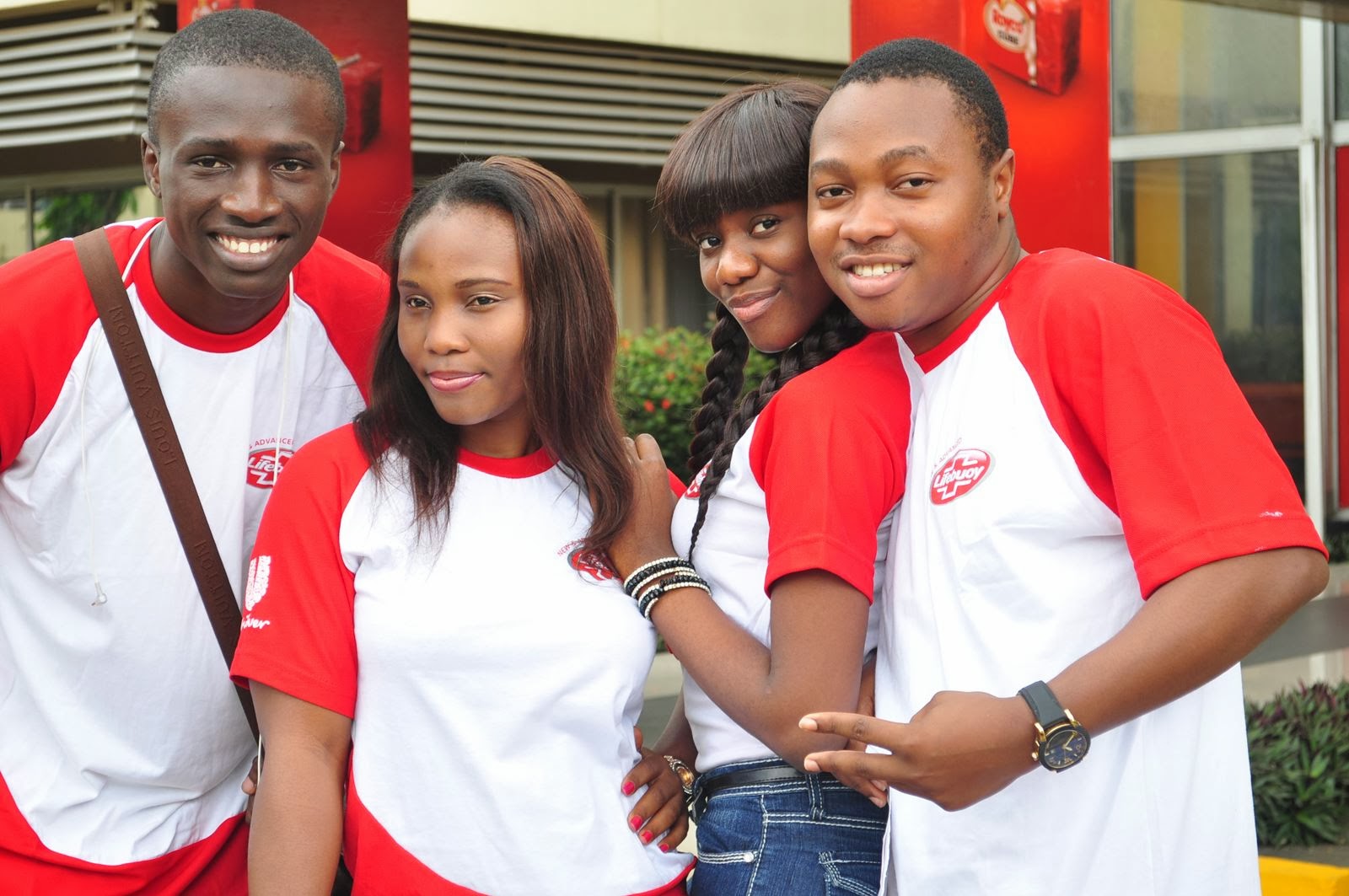
Unilever Interns celebrates Nigeria Independence in grand style in the Orphanage


Read the INDEPENDENCE DAY speech by Goodluck Jonathan

Jonathan-Goodluck.jpg

Fellow Nigerians,
1. Today marks 53 years of our Independence as a nation. First and foremost, I would like to saycongratulations to us all. Through thick and thin, we have built this country together. Through triumphs and trials, we have developed a Nigerian identity in our own way.
2. In truth, Nigeria is still a work in progress and we are challenged everyday to keep building in spite of the various obstacles that we face. Our strength has been in our diversity. If we look back over the years, we can say confidently that there is every reason to celebrate.

3. Today’s Independence anniversary is unique because it is the last before we mark our centenary. On January 1, 2014, Nigeria will be 100 years old as a country, following the amalgamation of the Protectorates of Southern and Northern Nigeria in 1914.
4. Beloved country men and women, traditionally, the Presidential address on this symbolic day has served two purposes. It has, quite rightly, been used to remind all Nigerians about our heritage. It has also allowed my predecessors and I to comment on our stewardship to the nation and make political capital out of a state occasion.
5. But this year, I will not. Because, today of all days, we should not be scoring political points. On the contrary, in this last year of the first century of our Union, we should be addressing our future as a Nation and a people!
6. I admit that these may not be the best of times for our nation. Our people are divided in many ways – ethnically, religiously, politically, and materially. I cannot hide from this reality. I cannot hide from my own responsibilities.
7. As we prepare to mark the centenary, therefore, today offers us an opportunity to reflect on our long journey to nationhood and the progress we have made so far. Whatever the challenges that we may face, we have every reason to be proud of our national accomplishments; we have every reason to remain proud and optimistic. Our collective national journey has witnessed great watersheds, thanks to our spirit of endurance, perseverance and sacrifice. Getting the rest of the job done with determination and courage is just a matter of time. We are Nigerians, a nation of talented people, endowed with resources, potentials, and Divine Grace.
8. In our journey to greatness as a nation, we have built an economy that is robust and erected enduring infrastructure and institutions of democracy. Our social system is now more inclusive, open and compassionate. We are waging a steady battle against poverty, unemployment, and corruption. Our sense of community, solidarity and shared expectation is strong and capable of withstanding the present social, economic and political challenges that still confront us.
9. In saying this, I am reminded of the comments I made a week ago to a cross-section of Nigerians in New York during the 68th United Nations General Assembly. I declare now as I declared then: we have a duty as Nigerians, whatever may be our differences or prejudices, to always put Nigeria first.
10. Our politics should be an art of patriotic labour and selfless service to the community, particularly by the political elite who are placed in positions of great trust and responsibility. Politics has its own high moral principles which abhor distracting and divisive rhetoric. As men and women in leadership, we must continually focus on service, duty, responsibility, and the next generation. Those who are elected to govern at all levels must focus on improving the lives of our people, not selfish ambition.
11. In the words of the American theologian and author, James Freeman Clarke, ‘a politician thinks of the next election; a statesman of the next generation’. Whether we are Muslims or Christians; rich or poor; from the North or the South; East or West; regardless of our political affiliations, this is the time for every one of us to be a statesman!
12. My clarion call therefore, on this special day, is that we should begin to align our political utterances and conduct solely to the nobler passions that unite our people. Politicians do not make a nation; ordinary folks do.
13. Our nation is made great by the big and small efforts of regular citizens. These are the teachers and men and women in academics who inculcate the knowledge and wisdom that transform into tomorrow’s wealth; the traders and market women who tend to our everyday needs; the farmers whose labour feeds the nation; the artisans whose work ensures that our homesteads are well maintained; the doctors, pharmacists, nurses, accountants, bankers, engineers, and other professionals who add value to our lives; the sportsmen and women and those in the creative industry who bring honour and fame to our nation;
14. And the men and women of our armed forces and security services who toil day and night so that you and I may live in a safe and secure nation.
15. It is the individual and collective heroism of these regular folks that has placed our nation on the path of greatness. Politics and politicians sometimes distract the people and create unnecessary tension.
16. But our independence celebration is about the same people, the people of Nigeria: their industry, sense of mission and purpose, and their patience and perseverance as we navigate historical turns in our march towards prosperity and self-sufficiency. Today, I salute the people of Nigeria.
17. My Compatriots, history has proven that nations take time to evolve. We should rejoice in our democracy because it enables us to be united by our differences, not destroyed by them. And, there is no more crucial time for us to be united than now.
18. The threats we face may be real and immediate. But we are not alone in this regard. It is a difficult season for much of the world: industrialized or developing; rich or poor. What matters are the lessons we learn, the wisdom we demonstrate, and the victory we snatch from the jaws of likely defeat.
19. And I tell you, more than anything else, there are lessons to learn, and every cause to be thankful. If I must cite one example, take Syria. As we all pray and work for a return to normalcy in Syria, it would be helpful for us to reflect on the fact that Syria was once a peaceful, thriving, multi-cultural nation which played host to a mosaic of religions and ethnicities.
20. But that once idyllic nation has today become a theatre of human misery of unimaginable proportions as a result of the activities of extremist forces.
21. Fellow Nigerians, the spectre of extremism haunts every democracy in every corner of the globe. While we celebrate our independence and good fortune, our hearts must grieve for those who have lost loved ones in numerous terrorist activities around the world.
22. Back home, I admit being overtaken by deep feelings of grief, whenever news reached me of the appalling atrocities in some of our States, especially the North Eastern part of our country. Just two days ago, terrorist elements attacked the College of Agriculture in Gujba, Yobe State killing a number of innocent students of the institution and other residents in cold blood, most of them in their sleep.  This act of barbarism is a demonstration of the extent to which evil forces will go to destabilize our nation. But I assure you, they will not succeed.
23. My heart goes out to the families of all those who have fallen victim of these dastardly acts. Our Administration will not rest until every Nigerian is free from the oppression of terrorism. I reassure you that no cost will be spared, no idea will be ignored, and no resource will be left untapped in the quest to enableour people live without fear.
24. On this day, I implore every Nigerian – wherever you are, whatever language you speak, whatever your religious persuasion, whichever Political Party you support -: let us join together to fight this evil of extremism.
25. On behalf of us all, I commend our Armed Forces and security agencies for their dedication and bravery in the face of grave danger, and in the name of our collective liberty.
26. Fellow Nigerians, this is a time to pull together behind the national cause: the cause of our freedom, and our future. We must rekindle the spirit of Nigeria, to ensure that every democrat and every lover of peace in this great nation continues to live in a free, peaceful, and secure Nigeria.
27. On my part, I re-dedicate myself completely to the service of this great country. I was elected President to continue the process of building a prosperous nation where hopes, dreams and aspirations would be fulfilled. Nigerians, home and abroad, want a country they can be proud to call their own.  I am pleased to affirm that, no matter the challenges we face, we are on the right path to greatness. Our Transformation Agenda, which is part of the overall vision of making Nigeria a land of greatness, has been delivering positive and encouraging results.
28. On May 29th this year, I presented to the nation a mid-term report of my Administration’s Transformation Agenda. This was conceived as an integrated policy aimed at reconstructing not only institutional governance for effective and efficient service delivery, but also a re-orientation of national norms and values.  The document captured the essence of our agenda in relation to core objectives and achievements.
29. I have been consistently mindful of the weight of public expectation to find solutions to the challenges that confront us because the mandate we have is a free and sacred one. In all that I have done, I have been guided by this sacred obligation, to work hard for the good of Nigeria and to make life better for Nigerians. I want to assure everyone that Nigeria, under my leadership, will not fail.
30. Exactly 53 years ago today, Prime Minister Tafawa Balewa urged us to ‘move with quiet dignity to our place on the world stage’. I am sure that there have been times when every one of us must have questioned how closely we have followed that injunction.
31. But again, I can reassure you that Nigeria’s place on the world stage today is strong and safe, and it is certainly a place of dignity and respect. We must continue to build on this by remaining a nation and a people committed to ideals, the noblest humanitarian values, and the rule of law.
32. Our Constitution is anchored ultimately on the idea of freedom and fundamental rights: freedom of expression; freedom from discrimination; freedom to vote and be voted for, and the right to human dignity. These are the core values of a true democracy. These are the values of which we must never lose sight.
33. In my address to the UN General Assembly last week, I emphasized the crucial role of democratization in improving the fortunes not just of this country, but of our entire continent. Democratic values encourage diversity. They encourage discourse. They encourage disagreement. This is the joy of democracy.
34. It enables us to have an opinion. And ultimately, the ballot box gives us all the opportunity to instigate change. When democracy works, it does not destroy a nation. It unites and defines it.
35. Fellow Nigerians, our Administration has taken cognizance of suggestions over the years by well-meaning Nigerians on the need for a National Dialogue on the future of our beloved country. I am an advocate of dialogue. When there are issues that stoke tension and bring about friction, it makes perfect sense for the interested parties to come together to discuss.
36. In demonstration of my avowed belief in the positive power of dialogue in charting the way forward, I have decided to set up an Advisory Committee whose mandate is to establish the modalities for a National Dialogue or Conference. The Committee will also design a framework and come up with recommendations as to the form, structure and mechanism of the process.
37. The Committee will be chaired by Dr. Femi Okurounmu while Dr. Akilu Indabawa will serve as the Secretary. The full membership of the Committee will be announced shortly.
38. I expect the Report to be ready in one month, following which the nation will be briefed on the nomenclature, structure and modalities of the Dialogue.
39.  Fellow Nigerians, the past 53 years have seen Nigeria evolve on an epic scale.  Our progress since independence has not always been smooth. This is, after all, our Fourth Republic; but despite all its flaws, it has lasted longer than all the previous three put together. That is progress and it proves that, our differences – real and imagined – notwithstanding, we are, in every sense, a united nation.
40. This is no time for the harmful clutches of parochial sentiments and the politics of bitterness, impunity, arrogance and unhelpful indiscipline. We must stand as one, with absolute commitment and resolve to resist any force that threatens us and the sanctity of our union.
41. I want to thank all our country men and women who have stood by this Administration in the midst of mounting challenges and enormous expectations.
42. I recognize that it is not easy to keep believing in the possibilities of our greatness when our faith is constantly challenged. But let me assure you that, if we do not despair, we shall reap the reward of our labour in due season.
43. It is my prayer that, another 53 years from now, our children and grand-children will look back on our effort and be thankful that we kept the faith.
44. May God continue to bless the Federal Republic of Nigeria.
45. I wish you all a very happy 53rd Independence Celebration.
46. I thank you.